
Please note: As of May 2025, the original Sun Ancon Chi Machine is no longer being sold in the USA.
Below is information and downloads for your reference.
Shop my Amazon Store for Available Models.
The Chi Machine offers a range of benefits akin to a therapeutic massage, providing effective relief from minor muscle aches, pains, and tension caused by fatigue or overexertion. Temporarily increasing circulation helps relax muscles locally, promoting a sense of well-being. An Australian study highlights its role in promoting lymphatic drainage and movement, contributing to overall health. Additionally, recent research suggests that regular use of the Chi Machine may positively impact conditions such as anxiety, stress, insomnia, fibromyalgia, lymphedema, and headaches.
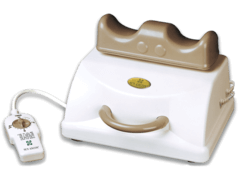
Dr. Shizuo Inoue was the Chairman of Japan’s Oxygen Health Association. With over 38 years of experience, he developed and designed the Original Sun Ancon Chi Machine. Dr. Inoue’s design was based on human physiology, allowing the body to work effortlessly with its natural frequencies. The machine’s figure 8 goldfish movement provides maximum body movement without undue pressure on the spine.
The Original Sun Ancon Chi Machine has one oscillation speed of approximately 140-144 cycles per minute. This oscillation speed is the one Dr. Inoue found most beneficial for the circulatory system and overall well-being. Dr. Inoue expressed in his book, Aerobic Respiration Exercise and Health, that a lack of the body’s ability to properly utilize oxygen could result in pain, numbness, stiffness, itchiness, and other signs of inflammation. He also believed that if this state continued within the body for long periods, it could lead to more serious health conditions.
Many individuals with the following problems benefited from using the Original Sun Ancon Chi Machine.
Lack of Exercise | Poor Circulation | Tired and Sore Muscles | General Aches & Pain | Insomnia | Stress
Period Pains or Anemia | Maintaining a Healthy Weight | Chronic Inflammation, Toxicity, and Stress
Poor Digestion or Constipation | Bone Spurs | Nervousness | Back Pain or Lower Back Pain
Poor Functioning Internal Organs | Asthma and Tracheal Inflammation | Chronic Health Conditions
How the Sun Ancon Chi Machine Works
The gentle, passive, aerobic, rhythmic movement of the Chi Machine may heighten your body’s detoxification and support healing. It oscillates from right to left or left to right, approximately 144 times per minute. In just 15 minutes, it gives your body the equivalent benefit of 1½ hours of walking. It may firm your hips, thighs, and abdomen and often supports a healthy weight.
The machine’s figure-8 motion is similar to that of a goldfish. This movement has a marked beneficial effect on the human body. This movement temporarily relaxes the muscles throughout the body, including the back, neck, and shoulders. It may also improve the flow of chi or energy and relieve muscular aches and pains throughout the body. Also, it performs a pure aerobic activity and operates at the best oscillation speed to promote deep breathing and temporarily improve circulation.
The chi machine also increases cellular oxygen. The motion created by the passive aerobic exerciser induces lateral flexion of the spine, stimulating and relaxing the sympathetic (part of the autonomic) nervous system and inducing an alpha-wave state similar to meditation, allowing you to relax. This relaxation causes the bronchi and alveoli (tiny tubes that branch out from your lungs) to relax and expand. These tiny bronchi and alveoli connect through a semipermeable membrane with the tiniest blood vessels of your circulatory system. With the expansion of the bronchi and alveoli due to breathing deeply, more oxygen can pass from your lungs into your circulatory system. Once in your circulatory system, the blood carries the oxygen to all the cells in your body.
Dr. Inoue scientifically designed the original machine to allow the legs to sway while the body is in a relaxed, reclined position. The effect of stimulation on our sympathetic nerves varies with the swing amplitude, frequency, and treatment duration. Individuals need to be careful in using fake or imitation chi machines to avoid possible negative effects. Its passive, aerobic movement is completely safe and smooth during its swing operation, helping avoid unnecessary side effects. We are all aware of the importance of having good circulatory and spinal health. It is said that 80% of chronic health conditions are related to the spine or our circulatory system.
Dr. Michael Yang a Doctor of Oriental Medicine uses the Chi Machine with his clients and has noticed that the Chi Machine helps promote circulation and reduces lymphedema or swelling in the legs. It is also beneficial for pain management, helping with spine pain, hip pain, neck pain, and Fibromyalgia.
Chi Machine Benefits

Motion Energy – Passive Aerobic Exercise
- Provides a passive aerobic exercise activity.
- Maximizes oxygen intake and efficiency.
- Promotes overall circulation.
- Promotes spinal balancing.
- Exercises internal organs.
- Assists in weight loss.
- Helps to eliminate fluid and water retention.
- Relieves minor muscle aches, pains, and tension.
- Helps Chronic Pain Sufferers
How to Use the Sun Ancon Chi Machine
The Chi Machine is really easy to use. All you have to do is lie down on the floor, center your body with the arrow, place your legs on the foot cradle, and relax as your body moves rhythmically.
You can also incorporate the various arm positions during its use to target different areas of the body.
Watch our video and read our full instructions on how to use the Chi Machine.
You can also download the Chi Machine Brochure.
Testimonial and Information Booklet
FAQ on the Chi Machine by Sun Ancon
1. What is the Chi Machine, and how does it work?
The Chi Machine is a wellness device that uses a gentle, oscillating motion to simulate the body’s natural swinging motion. Lying on the floor with your ankles in the machine’s footrests creates a smooth, rhythmic motion that helps stimulate your body’s energy flow. This motion aims to enhance circulation, promote relaxation, and support overall well-being.
2. What are the key benefits of using the Chi Machine?
The Chi Machine offers several benefits, including:
Improved Circulation: The oscillating motion enhances blood flow and oxygenates tissues.
Stress Relief: Regular use can promote relaxation and reduce stress levels.
Enhanced Energy Levels: Stimulating the body’s energy flow can help improve overall vitality.
Pain Relief: It may help alleviate muscle aches and discomfort by promoting better circulation and relaxation.
Better Flexibility: The gentle movement can help loosen tight muscles and improve flexibility.
Product Specifications & Precautions
- Model Number SDM888 (replaced Model SM330)
- Weight: 15.5lb / 7kg
- Dimensions – 13.15″ X 9.25″ X 11.69″ (334cm X 235cm X 297cm)
- USA: 120 v – 60Hz – 34w
- Swing Frequency: 140-144 oscillations/minute
Swing Travel: 1.5 inches / 37mm
Wing Angle: 12 degrees
RPM: 1800/1500 - Power Consumption 34w
- Colors are White and Grey.
Precautions: Do not use for at least 3 months after an operation or bone fracture, if suffering from a serious infection, have a bleeding injury or heart disease, if suffering from epilepsy, or during pregnancy without prior medical advice. Some people with dizziness may notice it worsens with use. It is not recommended within 30 minutes of eating. If extreme pain occurs during use, investigate the cause and correct the problem before reusing the machine. If you have a medical condition, consult your physician before using.
Downloads
- Chi Machine Instructions
- Chi Machine Brochure
- Oxygenation with the Chi Machine
- Indexed Testimonial Book
- Chi Machine Research
Recommended Products
Since the original machine is no longer available, and none of the imitation machines duplicate the height, motor, or oscillation speed, I still feel that using a chi machine offers many benefits of movement, circulation, and lymphatic drainage. I would recommend and take a look at Daiwa Felicity’s Machines. You can view the Chi Vitalizer and the Chi Swing Machine.