
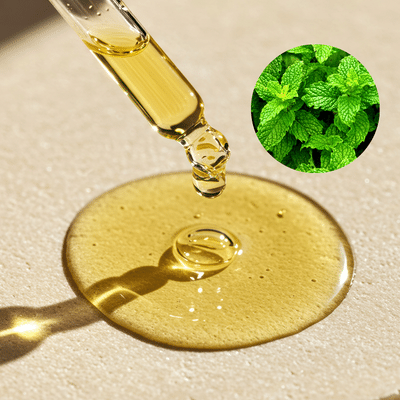
Peppermint Essential Oil Traditional Uses and Recipes
Peppermint essential oil (Mentha x piperita) is produced from the perennial herb through the process of steam distillation. It has a strong, fresh, minty herbal smell. It is cooling and warming, uplifting and energizing, depending on its application. Peppermint is often used in cooking, as a flavoring for food, and is found in many toothpastes, mouthwashes, breath fresheners, and soaps. I find it’s used often during the holidays for mint candies, cookies, and room sprays.

Peppermint oil is generally safe. Some people, however, may find that it can cause some irritation to their skin or mucous membranes, causing them to be oversensitive to it. It may also counteract homeopathic remedies, so if you are taking homeopathic remedies, you may want to stay away from peppermint oil. You should also avoid using the oil with children under 5 years of age because it can be too much for their nervous system when applied near their face. Tisserand says it may be contraindicated in cases of cardiac fibrillation and may potentially affect blood clotting.
Peppermint essential oil is high in menthol. It is best known as an analgesic, anti-inflammatory, antibacterial, antifungal, antispasmodic, antiviral, astringent, decongestant, expectorant, and being liver supportive and protective.
Traditional Uses of Peppermint Essential Oil
Peppermint oil is another versatile oil that is great to always have on hand. It is very beneficial in pain relief creams, massage oils, or salves to help with muscle pain, bruises, and joint pain. Peppermint oil is helpful to settle an upset stomach. It can improve focus and concentration when your brain begins to tire. Peppermint essential oil is beneficial for colds, flus, headaches, and fevers and helps to relieve sinus congestion. It is useful for many different types of skin irritations, including insect bites; however, make sure to use no more than 4-6 drops per ounce. I love to use peppermint to refresh my tired, achy feet!
Using Peppermint
Peppermint works great for tired, achy feet. I use it with some Epsom salt in a foot soak. Take 1/2 cup of Epsom Salt and mix in 1 -2 drops of peppermint essential oil, add to a basin or tub of warm water, and soak your feet for 15- 20 minutes. Refreshing! When mixing essential oils with water, you need to use an emulsifier like Solubol.
For gas, pain, or abdominal bloating, you can use peppermint essential oil mixed in a massage oil. Try 1 oz of Jojoba Oil and add 2 drops of peppermint and 4 drops of chamomile or lavender, and apply it to the abdomen for relief.
For congestion or sinus headaches, I usually make a roll-on. Take a 10 ml roll-on bottle and fill it with jojoba or almond oil and mix in 1-2 drops of peppermint, 2-3 drops of lavender, and 2 drops of frankincense, and apply.
You can purchase Peppermint Essential oil by visiting Aromatics International.
Remember to follow suggested safety practices when using essential oils.
References:
Battaglia, Salvatore. The Complete Guide to Aromatherapy. Brisbane: International Centre of Holistic Aromatherapy, 2003. Print.
“Essential Oils, Body Butters, Carriers, Hydrosols.” Aromatherapy Pure, Organic Essential Oils | Aromatics International. N.p., n.d. Web. 30 Nov 2016. <https://www.aromatics.com/>.
Pressimone, Jennifer. Holistic Aromatherapy Comprehensive Guide, JennScents, Inc: 2015. Print.