
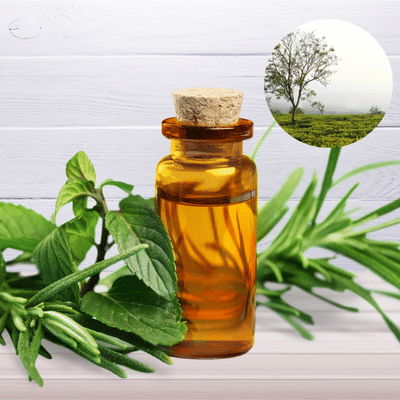
Tea Tree Essential Oil Traditional Uses and Recipes
Tea Tree Essential Oil (Melaleuca alternifolia)
Tea Tree Essential Oil is produced from the leaves of its shrub through the process of steam distillation. The Tea Tree Shrub loves swampy areas and river banks. It usually grows off the coast in Australia. To me, it has a fresh herbal disinfectant-type smell. It is very cleansing and purifying. This is also a great essential oil to have in your starter kit because it has antimicrobial properties, and many use it topically for those benefits.

It is another safe essential oil to use. However, it can be sensitizing to the skin, so you want to make sure not to overuse it and to dilute it before applying it topically. Tisserand says that skin sensitization is a low risk when diluted. You should also avoid using old or oxidized tea tree essential oil.
It is high in terpinen-4-ol, which makes it effective as an antimicrobial. It is most known for its analgesic, anti-fungal, anti-bacterial, anti-inflammatory, anti-spasmodic, decongestant and expectorant properties.
Traditional Uses of Tea Tree Essential Oil
IT is also another versatile essential oil, even though its medicinal smell can make it hard to work with for some. Its benefits as an antimicrobial make it very useful for acne, athlete’s foot, fungal infections, blisters, burns, cold sores, insect bites, oily skin rashes, and warts. It also works well for the respiratory system, helping with asthma, bronchitis, coughs, and sinusitis.
Using Tea Tree
I love to use Tea Tree essential oil for my sinuses in a steam. I also use it in my homemade cleaners for the house and to add it to a gel to use on my skin for rashes.
All Purpose Cleaner: I usually make a 32-ounce spray bottle for cleaning. When I make a spray bottle, I usually alternate the oils and will combine tea tree with lemon, sweet orange, or grapefruit. It gives it a fresh, uplifting scent. You can add 10 drops of tea tree and 10 drops of lemon, sweet orange, or grapefruit. Remember, I usually only combine 2 of the oils; you can mix it up and do 10 drops of tea tree and 5 drops of lemon and 4 drops of orange to a natural cleaner you use!
For Skin Rashes: I usually make a 2 oz container of Aloe Vera Gel mixed with 10 drops of Tea Tree and 10 drops of Lavender. It really works well for helping your skin heal and not to itch and has great anti-microbial and skin healing properties! If you have a lot of inflammation, you can also add 2-4 drops of Roman Chamomile.
For Toenail Fungus: Tea tree oil has natural antifungal properties and has been studied for fungal nail infections. Toenail fungus may cause discoloration, thickening, crumbling, or lifting of the nail. Toenails are more susceptible to this kind of infection and are more common among people who wear closed footwear or have a weakened immune system. It may also help with the itching of athlete’s foot.
For Acne: Tea tree oil is a popular ingredient in natural skin care products. Some research suggests that a 5% tea tree oil gel may help reduce mild acne, although it may work more slowly than benzoyl peroxide. Please know that Tea tree oil can cause irritation or allergic reactions, so use a properly formulated topical product and avoid applying undiluted essential oil directly to your skin.
Tea Tree Essential Oil is in the following Aromatherapy Products: Breathe Aromatherapy Inhaler.
You can purchase Tea Tree Essential oil by Visiting Aromatics International Website.
Remember to follow suggested safety practices when using essential oils.
References:
Battaglia, Salvatore. The Complete Guide to Aromatherapy. Brisbane: International Centre of Holistic Aromatherapy, 2003. Print.
“Essential Oils, Body Butters, Carriers, Hydrosols.” Aromatherapy Pure, Organic Essential Oils | Aromatics International. N.p., n.d. Web. 30 Nov 2016. <https://www.aromatics.com/>.
Pressimone, Jennifer. Holistic Aromatherapy Comprehensive Guide, JennScents, Inc: 2015. Print.