
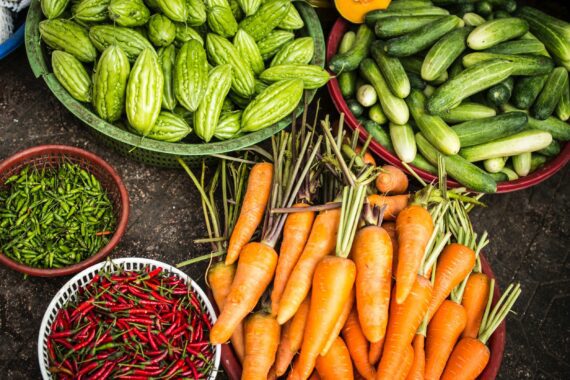
Essential Minerals and Trace Minerals: Why Your Body Needs Them After 40
Minerals are essential to your health, especially as we age. You can’t sustain your health without minerals. Major minerals as well as trace minerals impact your health. These essential minerals are needed by your body to support gut health. There’s not much controversy surrounding the health benefits of minerals and eating foods that support overall health.
Why Minerals Matter
It’s important to remember that vitamins and minerals are different. Vitamins are organic substances that are made by plants and animals. Minerals are inorganic substances that come from the soil and water. Both vitamins (fat and water-soluble) and minerals are needed for sustained health. Organic substances (vitamins) can be broken down by various factors, including heat, light, and water. Inorganic substances (minerals) maintain their chemical structure. So cooking your food may affect some vitamins, but minerals generally remain intact. Minerals are also absorbed differently by the body.
The Soil Depletion Problem
At one time, people obtained all the nutrients their body needed from the food they ate. That is no longer the case in modern society, particularly when it comes to minerals. Minerals must be present in the soil in order for plants (and animals that eat them) to obtain them. Plants also need assistance from fungi and bacteria in the soil to properly absorb minerals. Our bodies can’t efficiently extract minerals directly from the soil and must obtain them primarily from foods. If sufficient minerals aren’t in the food we eat, we’ve got a problem.
When it comes to minerals, modern society is in trouble because modern agricultural practices have greatly depleted mineral content and availability. NPK fertilizers that contain nitrogen, phosphorus, and potassium are popular because they help make plants grow, but they don’t replace all the minerals taken from the soil by previous crops. Thus, soils have lower mineral content than they did just 100 years ago.
The problems become compounded with the use of chemicals like pesticides and herbicides, diminishing the microflora in the soil. Without the microflora, plants may not be able to absorb the minerals from the soil if they are even available. Soil depletion has not occurred overnight; it has been developing for decades. This decline in soil health is one of the reasons why so many of us are overfed and undernourished.
Today, many farmers are planting cover crops to replenish the soil and help the soil rebuild its microbiome.
Major Essential Minerals

Below is a list of the major essential minerals that are essential for maintaining health and the foods in which they are found.
The right diet isn’t just tasty, but it will provide you with the energy, bone density, blood flow, and general health-related superpowers that will allow you to live a more active life.
So here we go! Here are the major essential minerals that are best for building your body.
Calcium. This is a real key for strong bones and serves as a safeguard against osteoporosis. You’ll find this super-hero nutrient in milk, yogurt, cheese, and other dairy products.
Phosphorus is needed along with calcium to build strong bones and teeth. It is also a component of every cell and helps your body maintain its pH. It is found in meat, fish, poultry, eggs, and dairy.
Magnesium: Supports over 300 enzymatic reactions, including muscle and nerve function, blood glucose control, and energy production. It is found in nuts, seeds, legumes, leafy green vegetables, and whole grains.
Sodium is a mineral that acts as an electrolyte and helps your body maintain the balance of fluids, and is involved in blood pressure, nerve, and muscle function. It is found in table salt, meats, and vegetables.
Iron. This is one of those behind-the-scenes minerals that nonetheless provide a critical function in red blood cells to prevent anemia. On the food front, iron can be found in fish, nuts, lean meats like beef and chicken, spinach, broccoli, peas, and other leafy green vegetables.
Potassium. First of all, it counters the effects of too much salt. It also lowers the risk of heart disease and stroke. Best known in bananas, potassium is also found in raisins, milk, oranges, and leafy greens like spinach and kale.
Trace Minerals
Trace minerals include Boron, Chromium, Copper, Iodine, Lithium, Manganese, Molybdenum, Selenium, Silver, Sulfur, Vanadium, and Zinc. These trace minerals play an important part in our health.
- Boron helps our body process some of the major minerals.
- Chromium helps our blood maintain a healthy blood sugar.
- Copper helps keep the tissues in the body flexible.
- Iodine is more of an element that is needed for proper thyroid function. It is also beneficial for breast, uterus, and prostate health.
- Lithium may be beneficial for bipolar disorder.
- Manganese is involved in the metabolism of carbohydrates and protein, as well as keeping our connective tissue and joint health.
- Molybdenum helps to detox the liver and acts as an enzyme activator.
- Selenium helps prevent free radical damage and works well with Vitamin E for heart health.
- Silver is an element with antimicrobial activity.
- Sulfur helps reduce pain and inflammation.
- Vanadium helps our teeth and bones stay healthy.
- Zinc helps men’s health, our immune system, and our hair and skin.
Gut Health Connection
Gut health and minerals have a powerful relationship that goes both ways. The microbiome in your gut helps your body absorb minerals from the food you eat, and these minerals that you eat help shape the diversity of your microbiome. An imbalance in the microbiome can disrupt your digestion, energy levels, and immunity.
Magnesium and Zinc help support the gut lining and regulate digestive enzymes. Bloating and indigestion can be signs that you are deficient.
Iron is necessary for your body; however, if you are not absorbing it, your body has an excess of unabsorbed iron, which can feed inflammatory pathogens in your gut.
Phosphorus and Calcium can help boost the diversity of the microbiome and SCFA production.
How to Get More Minerals
The Foods We Eat
It is so important to eat good food so your body gets the essential minerals and nutrients it needs. Too many of us eat processed foods high in sugar, and these foods affect our health. Keeping things as simple as possible and as close to what nature intended is a great place to start. Fruits, vegetables, and whole grains are great sources of mineral-rich foods. These foods will feed the beneficial bacteria in your gut and help your body with the essential minerals it needs. Avoid eating processed foods, white flour, white sugar, and excess salt.
Supplements for Support
Supplements are available and vast. Many of us are familiar with calcium and magnesium. Some of us have taken iron and potassium supplements. If you choose to supplement with minerals, make sure they are high-quality and contain the ingredients needed for maximum absorption.
When you focus on what you put into your body and give your body the nutrients it needs, you will be stronger, leaner, have better digestion, and be full of energy. I know, I have been working with individuals who have benefited from improving their overall diet and gut health. If you want to learn more join our Gut and Glow Program or start building a stronger foundation with the Healthy Habits Challenge.
This article was originally published as part of the Sunshine Sharing newsletter series.
Browse the archive
What are essential minerals?
They are naturally occurring elements your body needs to build strong bones, regulate your metabolism, and maintain hydration as well as gut health.
What is the difference between major and trace minerals?
Your body requires both types of minerals; they use them differently. Major minerals help form more of the structural components of the body and help manage fluid balance, while trace minerals act as catalysts for chemical reactions and enzymes.
Can poor gut health affect mineral absorption?
A diverse microbiome that is balanced is needed for absorbing essential minerals. When your microbiome is balanced, it produces short-chain fatty acids that lower the pH of your lower intestine, helping to dissolve them.
What foods contain the most minerals?
Nutrient-dense whole foods like seeds, nuts, dark leafy greens, legumes, and dark chocolate contain the most minerals.
Why are minerals important after 40?
As we age, maintaining bone density is important, as is cardiovascular health and muscle function. Calcium, magnesium, potassium, and zinc are most important.