
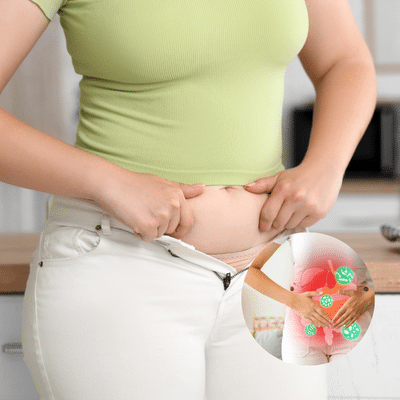
Gut Health and Weight Gain After 40: What’s the Connection?
Stubborn weight after 40 isn’t always about eating too much. Your gut health and weight gain are connected, along with many other changes that occur as we age. Our activity levels, muscle mass, sleep quality, stress, hormones, eating patterns, medications, and metabolic health can all change as we age. Gut health may also be another piece of that puzzle.
How Gut Health and Weight Are Connected
Your gut health isn’t independent from the rest of the body. Many things influence it. Your microbiome, digestion, appetite, blood sugar/metabolic health, and inflammation are all connected to your gut health and weight gain. Your gut microbiome plays a part in your weight because it can influence how your body gets energy from food, help regulate hunger hormones, and influence inflammation. All of these influence your weight and your ability to lose weight. Studies have been conducted to examine the influence of the microbiome on obesity.
Why Weight Gain Can Become More Common After 40
As we age, we lose muscle mass, and our activity level seems to decline. We also encounter more stress due to lifestyle changes, with children leaving for college and aging parents. Both men and women also undergo hormonal changes, which can affect metabolism and body composition. Sleep and lifestyle habits also impact weight gain. Your body needs adequate sleep, and when you don’t get enough, it can affect hormones involved in hunger and appetite, which may increase cravings and make maintaining a healthy weight more difficult.
Signs Your Gut May Need More Support
There are many signs your gut may need some support, especially if your eating times are sporadic and you are eating a highly processed diet. A poor diet, as well as poor sleep or lifestyle habits, can lead to bloating, constipation, and general digestive discomfort, all of which are linked to your overall gut health and weight gain. If you are dealing with these issues, you may want to think about giving your gut some more support.
The Gut-Metabolism Connection

Your gut is also closely related to your metabolic health, or metabolism. The gut’s microbiome influences how your body breaks down food, stores fat, and regulates blood sugar. When we eat foods high in dietary fiber, the microbes break it down and produce short-chain fatty acids (SCFAs).
These SCFAs can influence energy metabolism, satiety, and how the body stores and uses energy. The gut microbiome also stimulates cells to release hormones like GLP-1 and PYY that also help manage blood sugar, insulin sensitivity, and appetite.
Healthy Habits That Support Your Gut and Metabolism
Healthy lifestyle habits are a big part of supporting your gut health and weight gain as well as your overall metabolism. Below are key habits to focus on:
- Limit foods high in added sugars and that are highly processed. These foods can disrupt the gut lining, weakening the intestinal barrier and allowing toxins into your bloodstream.
- Focus on fiber-rich whole foods, including whole grains, fruits, vegetables, leafy greens, beans, nuts, and seeds. You can also include quality protein, healthy fats, and fermented foods like yogurt and kimchi.
- Regular exercise is also beneficial for both your metabolism and gut because it helps to increase the diversity of your microbiome, which helps reduce inflammation.
- Managing your stress and getting ample sleep is also important.
Can Supplements Help?
Supplements can benefit and support the body. Many people include probiotics, digestive enzymes, and super Omega 3s to help support them. For more information on supplements, read our article, Best Supplements for Gut Health and Weight Loss.
When You Need More Than General Advice
If you want more help and you’re dealing with stubborn weight, digestive issues, and metabolic concerns as you age, learn more about my 1:1 Gut & Glow Program.