
Pain Awareness: Understanding Your Pain and Recognizing Your Patterns
We have talked about what chronic pain is, the different types of pain, and how we fall into and create the chronic pain cycle. One of the most important skills you can develop is becoming aware of your own pain. Pain awareness is about paying attention to how you feel and recognizing what contributes to making your pain worse. It is also about helping people understand the impact pain has on their daily lives.
What Is Pain Awareness?
Pain awareness is all about paying attention to how you feel and how you react to the things going on around you, as well as how your body responds to movement. You need to pay attention to yourself, which includes your pain levels, your body, your emotions, your activities, and learning what your personal triggers are. When you start paying attention to these things, it can help you better manage your pain instead of reacting to it.
Why Pain Awareness Matters

Becoming aware of your pain and your pain levels helps you recognize patterns and identify what your triggers are. It also helps you understand why you get flare-ups. When you develop pain awareness, you are better able to communicate with your doctors and make healthier lifestyle decisions.
Understanding Your Pain Patterns
Here are questions to help you improve your pain awareness.
Questions you should be asking yourself:
- When is my pain at its worst?
- What activities do I do that increase my pain?
- What helps reduce my pain or make me feel better?
- Does stress increase my pain?
- Do I have more pain when I don’t sleep well?
- Do I notice a change in my pain relating to the weather?
- Do certain foods make my pain feel better or worse?
If you start asking yourself these questions and really take time to think about them, you will be on your way to learning how to identify your triggers and how to manage or reduce them.
Pain Isn’t Just Physical
It would be great if pain were really just physical; however, pain is influenced by our stress levels, emotions, sleep quality, inflammation, and movement. Each of these areas impacts your pain, some in a good way, some in a bad way, and we will be exploring each one later in more detail.
Keeping a Pain Journal
I know, it’s a lot to keep track of, which is why I recommend keeping a journal. Consider keeping a simple journal so you can track the following on a daily basis. This will help you to start recognizing patterns and triggers. We’ll look at pain journaling in greater detail later in the learning center as one of several coping tools.
Keep track of the following:
- Pain Levels
- Activity
- Sleep
- Stress
- Food
- Weather
- Medications
My Perspective
As a coach and a person living with pain, one of the biggest things I learned was that I couldn’t manage what I didn’t understand. Once I started paying attention to what triggered my pain, what helped, and what caused setbacks, I began making better decisions about my overall wellness. Pain awareness helped me stop those knee-jerk, panic reactions and start me on a path of planning. I found out certain foods, the barometric pressure, and the bright lights in super stores were triggers that often increased my pain, fatigue, and sometimes even caused headaches.
Living Beyond the Numbers
Pain awareness is more than the pain scale. Every time you go to the doctor, they ask you to rate your pain on a scale of 1 to 10. If you’re unfamiliar with the standard pain scale, here’s a simple explanation of how healthcare providers commonly use it. That’s great, but your pain is so much more than a number. What does an 8 out of 10 or a 5 out of 10 mean? You have to function, and next time they ask you, think about how your pain impacts your grocery shopping, cooking, sleeping, or thinking clearly. Think about how much you are enjoying your life. These things are so much more meaningful than your pain levels, and that is what living well with chronic pain is all about.
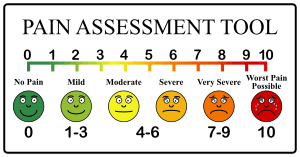
The pain scale is a useful tool, but it doesn’t tell the whole story.
Key Takeaways
- Pain awareness is more than rating your pain.
- Learn your personal triggers.
- Notice patterns.
- Keep a journal.
- Awareness leads to better decisions.
To learn more about living with chronic pain, visit our learning center where we share more information: Living With Chronic Pain Learning Center. To learn more about spreading the word, learn more about Pain Awareness Month.