
Can Ketamine Help Relieve the Pain of RSD and CRPS?
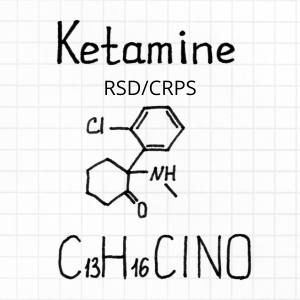
Ketamine is an anesthetic medication that has also been studied for its ability to help manage chronic and neuropathic pain, including pain associated with RSD / CRPS. Because of how it acts on your brain, it also has the potential to relieve symptoms of post-traumatic stress disorder and depression, both of which you can develop as a result of your chronic and severe pain conditions, according to Dr. Nancy Sajben, a pain management specialist.
Opioid-based medications work best on acute pain, but they are not as effective for chronic pain. A drug that reduces the need for opioid medications is needed. Because your pain comes with many symptoms (dystrophy and motor symptoms, sensory and autonomic pain that worsen with time), your condition actually alters your brain activity within the NMDA receptors. This makes your pain worse. Ketamine acts in part by blocking NMDA receptors, which are involved in pain signaling and central sensitization.

Knowing how ketamine works, what are the controversies around it?
First, this medication has some psychotropic properties, including causing hallucinations (ketamine intoxication). Taking a benzodiazepine can reduce the hallucinogenic effects.
One term for its dissociative effects is “K-hole,” which refers to users experiencing a distortion in bodily awareness, causing them to feel as if they are flying or gliding on silk. Once they come out of ketamine’s effects, they reintegrate slowly. They find body movement difficult, probably because they might not be aware they have a body. These side effects have led medical professionals to rely less on ketamine for human use. Because of the risk for illicit use, in 1999, ketamine was placed on Schedule III of the United States Controlled Substances Act. Recreational users have made it popular for use at raves – its street name is “Special K.”
Ketamine has a less pronounced effect on the respiratory system than other anesthetic medications. Instead, it actually stimulates the circulatory system. As a strong analgesic, this medication can be used in sub-anesthetic doses to relieve acute pain.
What is Means for You
What this means for you is that Ketamine may help reduce CRPS pain for some people, particularly when administered using a low-dose intravenously under medical supervision. Low doses of ketamine may still cause side effects, including dizziness, lightheadedness, nausea, changes in perception, and hallucinations. For this reason, the medication should only be administered when a trained physician is available should any potential adverse effects develop. If this is a therapy you want to consider, but you are concerned about the hallucinogenic side effects. In that case, your doctor can also prescribe a benzodiazepine sedative to help control or avoid hallucinations.
When ketamine is found to be an effective treatment for your CRPS or RDS, it is administered either as an intramuscular injection or intravenously. It can also be used in smaller doses (0.1 to 0.5 mg/kg/h) to anesthetize pain-associated movement as well as neuropathic pain locally.
Your doctor may choose one of two treatment modalities once he determines that treatment of your pain condition with ketamine is a viable medical treatment for you. You can view this video for a complete explanation.
√ Treatment 1:
Your doctor can admit you to the hospital, either on an outpatient or inpatient basis. Using what is called the “awake technique,” he infuses a low dose of ketamine – between 25 and 90 mg of ketamine per day, in a five-day treatment regimen. In a 10-day medical infusion of ketamine, one patient received a four-hour ketamine infusion that escalated from 40 to 80 mg and responded with a significant reduction of pain. This patient also regained some mobility.
√ Treatment 2:
In the second modality, your doctor admits you to the hospital and puts you into a medically induced coma. You then receive an extremely high dose of ketamine – between 600 and 900 mg. This treatment is not allowed in the U.S. It is more common in Germany and Monterrey, Mexico. While the original injury is not cured, the resulting CRPS or RSD is, in effect, cured or placed into remission. Patients who were wearing morphine pumps are able to have them surgically removed. A patient in Tuebingen, Germany, with CRPS stemming from a wrist injury, underwent the medical coma treatment.
Her ketamine doses were increased by 3 to 5 mg/kg/hr per day, in conjunction with midazolam over five days. Her swelling and skin discoloration disappeared on the second day. She began moving her right arm spontaneously. On the sixth day, her CRPS symptoms were completely resolved, and her ketamine infusions were tapered down. Eight years after her treatment, she has stayed in complete remission. Because of the high dosage of ketamine, she did experience psychiatric side effects, which were managed with midazolam. These effects resolved themselves within one month of her hospitalization and treatment, according to the Bionity website.
Historically, high-dose ketamine coma treatment was explored as a way to produce prolonged remission in severe cases of CRPS. This approach involves much higher doses of ketamine and carries significant risks. Current CRPS treatment guidelines do not recommend high-dose ketamine coma because of the potential for serious side effects.
Ketamine’s Side Effects
Ketamine can cause side effects including dizziness, nausea, changes in perception, sedation, increased blood pressure, and hallucinations. The risks can vary depending on the dose, method of administration, and individual patient.
Another Beneficial Effect of Ketamine
Your RDS or CRPS may have led to symptoms of depression or PTSD. A low dose of ketamine, taken via a nasal inhaler, can treat your CRPS or PSD pain and symptoms of major depression, according to Dr. Nancy Sajben. View more articles we offer on chronic pain.
Updated 2026: Ketamine continues to be studied and used for some people with CRPS. Research suggests intravenous ketamine may provide pain relief for some patients, although response varies and the duration of benefit remains uncertain. Ketamine treatment should be discussed with and administered by qualified medical professionals.
References: Ketamine Intranasal for Rapid Relief of Pain and Depression (http://painsandiego.com/tag/ketamine/); Ketamine (http://human.freescience.org/htmx/ketamine.php); Ketamine (http://www.bionity.com/en/encyclopedia/Ketamine.html)